
Parshat Vayishlach
THE FEAR THAT MAKES US STRONG
Shalom, friends.
Golda Meir is often quoted as saying: “When peace comes, we will perhaps in time be able to forgive the Arabs for killing our sons, but it will be harder for us to forgive them for having forced us to kill their sons.”
I've always found this statement interesting, but something about the sentiment has rubbed me the wrong way. I couldn't quite put my finger on what felt inaccurate.
In this week's parsha, Yaakov prepares cautiously for his reunion with Esav after 34 years apart. When he hears that Esav is approaching with 400 men, Yaakov becomes exceedingly frightened.
Rashi makes a fascinating distinction in describing Yaakov's fear. He was afraid of being killed, but also distressed at the possibility that he might have to kill others (Rashi, Genesis 32:8).
This second dimension of Yaakov's fear speaks to me deeply. I think it captures something fundamental about our identity as a people and the struggle of the State of Israel.
Having spent the last 35 years in Israel and getting to know Israelis, I have come to understand that we are, by and large, a loving people. I have yet to meet an Israeli that enjoys killing. Yet we have been forced into a reality in which we must turn our young sons and daughters into warriors and teach them the art of killing. It is an unfortunate and deeply painful necessity. I myself have carried and continue to carry weapons and responsibility to protect and kill if necessary and it hurts. Its heavy. I repeatedly hear Bob Dylan's poignant words from 'Knocking on Heaven's Door, "Mama, put my guns in the ground I can't shoot them anymore..."
But there is something else in Rashi's words that I find important. They challenge an archetype of Jewish weakness that I grew up with in the shadow of the Holocaust. So much of my childhood was shaped by the image of Jews being led like sheep to the slaughter. It sometimes felt as though we had become a people who were good at being killed.
But here is Yaakov, returning to the Land of Israel, confident in HaShem's promise and seasoned be lifes challenges. He is not a schlepper! He knows what it means to be vulnerable and to stand up for himself. He is not naive about danger, and he is certainly not helpless.
He prepares himself diplomatically, spiritually and physically for his encounter with Esav. He knows he can defend himself. And yet, even in his greatest moment of fear, he is distressed by the possibility that he may have to kill.
This is not a picture of Jewish weakness. It is a picture of Jewish strength.
Perhaps there is a larger question connecting Yaakov's experience to our own history. After 2,000 years of exile, centuries of persecution, pogroms and ultimately the Holocaust, have we also returned to the Land of Israel understanding that we must be prepared to defend ourselves, even if that means learning to kill?
And perhaps this is the paradox of our Jewish identity today. We have become capable of doing something we deeply wish we never had to do. We can defend ourselves, fight and protect our children. But we have not abandoned the prophetic vision of a world in which nations no longer lift up swords against one another and we no longer learn war.
Can we become a people capable of defending ourselves without becoming a people who love war?
And perhaps now I understand what has always bothered me about Golda Meir's quotation. Maybe this isn't fundamentally a story about forgiving our enemies. It's about whether we can continue to love ourselves, even though for the better part of 80 years we have been forced to engage in war and to do things that are so contrary to our deepest values. Can we recognize that having to fight does not make us a people who love violence? Can we accept the burden of defending ourselves without losing sight of who we are and who we want to be?
Yaakov's fear reminds us that these two things can coexist. Strength does not require a love of violence. And the ability to fight does not mean we have stopped praying for peace.
May we have the strength and perseverance to defend ourselves, and the fortitude to preserve our love of all life, even when we have to fight.
Shabbat Shalom,
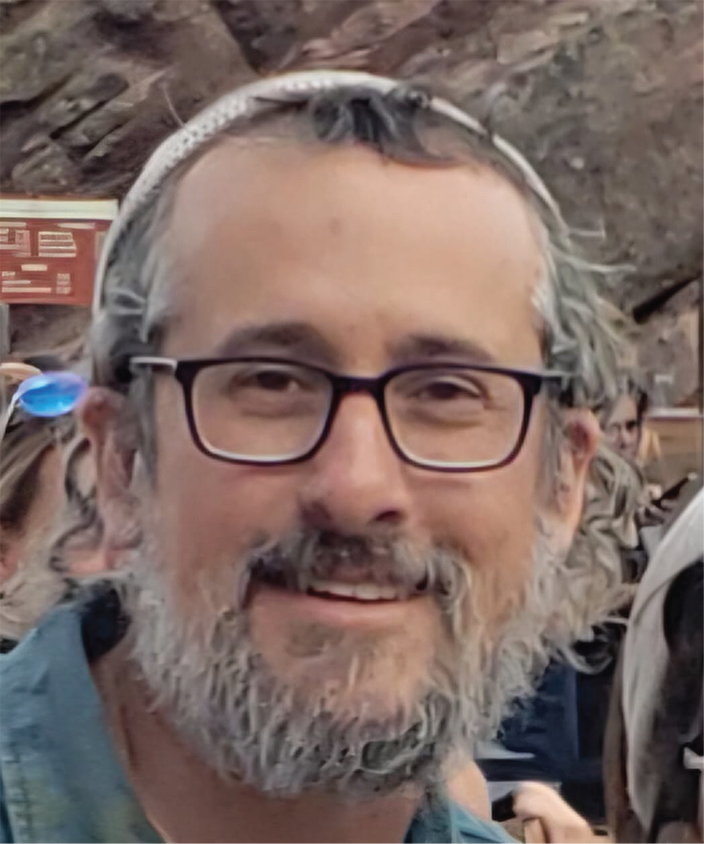
Rav Ariel Shalem
Comments